- Empty cart.
- Continue Shopping

Inclusivity Improved Winmaker Casino Makes Platform Easier for UK
- Posted on
admin
- 0
- Categories: Uncategorized
When I first heard that Winmaker Casino had revamped its platform with a emphasis on accessibility, I approached the update with a considerable dose of scepticism. Too many operators approach inclusivity as a checkbox exercise as opposed to a true design principle. I spent several days evaluating the revamped interface using a mix of assistive tools, keyboard-only navigation and visual adjustments. My objective was to determine whether these changes actually lower barriers for players with various needs, particularly those based in the United Kingdom where digital accessibility expectations are progressively strict. What I observed was a considerate, if not yet ideal, step towards a more inclusive gaming environment. The neat layout right away signalled intent, but the real test lay below the surface in the code and interaction patterns. I concentrated on screen reader behaviour, focus management, customisation panels and the clearness of core flows like payments and responsible gaming. While I recognised some gaps that third-party integrations create, the improvements are significant enough to warrant a thorough breakdown.
Screen Reader Compatibility and ARIA Implementation
Testing with Top Assistive Technologies
I performed my screen reader assessment using NVDA on a Windows laptop and VoiceOver on an iPhone, as these are two common configurations for players who depend on auditory feedback. Browsing the game lobby, I noticed that every interactive element had descriptive accessible names, and ARIA live regions declared balance updates and bonus activations without causing a page reload. The game thumbnails were properly labelled with title and provider information, so I never had to wonder what a “Play” button would start. When I opened the account verification page, the required document list was presented in a logical sequence, and error messages for missing fields were announced politely rather than silently failing. I also examined the live chat widget and was glad that incoming messages activated an alert that my screen reader picked up immediately. There were a few instances where dynamic content updates in the sportsbook section lacked sufficient context, but these were limited to older third-party modules that Winmaker seems to be gradually replacing. The overall ARIA implementation felt mature, suggesting the development team understands the importance of semantic HTML and state communication for non-visual users.
- NVDA on Windows: all form controls, game tiles and navigation links announced correctly with role and state.
- VoiceOver on iOS: swipe gestures functioned to traverse the main menu, and buttons had appropriate touch targets.
- TalkBack on Android: checked briefly on a Samsung device, with comparable results and no unlabelled graphics.
Accessible Design and Intuitive User Paths
- Standardized navigation patterns across all sections decrease the need to reacquaint with layouts.
- Clear language is utilized for payment terms, bonus conditions and verification steps, steering clear of jargon.
- Multi-stage processes like KYC display a clear progress indicator with sequential stages.
- Absence of time-limited tasks during registration or deposit, removing unnecessary pressure.
- Error recovery is uncomplicated: forms emphasize the problematic field with a descriptive text explanation.
- Session history and transaction logs utilize simple tables with clear column headings that screen readers read easily.
Convenient Payment Methods and Authentication Process
E-wallet and Bank Transfer Clarity
I tested the deposit flow using Trustly and made a withdrawal via Skrill, paying close attention to how forms conveyed requirements to assistive technology. Each input field featured a persistent visible label and associated ARIA description, so my screen reader stated the expected format before I began typing. When I deliberately left a required field empty, the inline error message was both shaded and accompanied by an icon, making sure it was not conveyed by colour alone. The verification document upload section presented a generous drag-and-drop area with clear instructions, and I could also browse files using a keyboard-activatable button. After uploading, a status indicator acknowledged receipt and provided an estimated review time, which was also announced live. I found the entire cashier section pleasantly free of dark patterns: no hidden fees were revealed at the last step, and the deposit limits were displayed prominently before confirming the transaction. This transparency supports users with anxiety or cognitive impairments who might otherwise abandon a payment due to uncertainty. The only friction I noted was that certain bank redirect screens from external providers lack full keyboard support, though this lies outside Winmaker’s direct control.
Visual Customization: Contrast, Font Size, and Color Schemes
I dedicated considerable time within the accessibility settings panel, which Winmaker has placed conspicuously in the account menu rather than hiding it in a footer. From here, I could toggle a high-contrast mode that changed the standard dark theme for an off-white background with near-black text, raising contrast ratios well above the 4.5:1 minimum suggested by WCAG. The font size slider allowed scaling up to 200% without damaging the layout, and I noticed that all text containers used relative units that adjusted fluidly. More remarkable were the colour blindness profiles: I activated the deuteranopia filter and instantly saw red and green elements reassigned to distinguishable blues and yellows, notably critical in table game chips and balance indicators. The protanopia and tritanopia options performed likewise well. My only complaint is that the high-contrast toggle does not yet work to the live chat overlay, which maintains its default dark palette. Despite that, the variety of visual adjustments puts Winmaker markedly ahead of the average casino, allowing players to customize the interface to their visual requirements without relying on browser extensions or operating system overrides.
Early Observations of the Updated Interface
Loading the homepage for the first time, I spotted a intentional reduction in visual clutter. Where many casinos bombard users with pop-ups and autoplaying carousels, Winmaker goes for a static hero area with clear headings and direct calls to action. The navigation bar uses high-contrast text against a dark background, and I could quickly tell apart between game categories, promotions and account settings without straining. I appreciated the absence of distracting animations that can confuse users with vestibular disorders. The login and registration buttons are constantly visible and scaled appropriately for both mouse and touch interaction. During my test, I changed the viewport multiple times and found the responsive layout held together admirably, reorganizing elements into a single-column flow that kept logical reading order. This initial impression suggested me that the design team had likely collaborated with accessibility guidelines from the ground up, rather than applying fixes onto a chaotic template. The consistency of spacing and typography across pages also caught my eye, lowering the cognitive load of moving between the lobby, cashier and support sections. Overall, the first layer of interaction seems calmer and more predictable than what I experience on many competitor sites, which is a promising foundation for deeper technical accessibility.
Responsible Gaming Tools with Usability in Mind
Self-Exclusion Procedures and Session Reminders
Configuring a deposit limit was straightforward: I accessed the responsible gaming section, selected a daily cap and verified it with a single click https://winmakercasino.eu/. The interface immediately displayed the new limit, and a confirmation email was sent in plain text that my screen reader parsed without issue. When I initiated a self-exclusion, the process necessitated me to confirm the decision through a second prompt that clearly explained the consequences and duration, preventing accidental activation. I noticed that reality check pop-ups appeared as non-intrusive overlays that paused gaming but did not trap focus, and I could close them with the Escape key. The session history tool displayed time and spending data in a simple list format, workable with keyboard scrolling and screen reader table navigation. I regard these implementations accessible because they do not depend on complex graphical dashboards or overwhelming data tables; instead, the information is split into digestible chunks that fit players with attention deficits or those using magnification software. One suggestion I would offer is the addition of a direct link to external support organisations with phone and chat options clearly marked for screen reader users, though the current links to GamCare and similar bodies are present and functional.
Keyboard Navigation
Tab Order and Skip Links
Unplugging my mouse, I counted entirely on the keyboard to move through the platform from registration through to placing a bet. A prominent skip link showed up on the first Tab press, letting me to jump over repeated navigation blocks and go directly to main content, a feature that many casinos still neglect. The tab order maintained a logical left-to-right, top-to-bottom sequence that aligned with the visual layout, and I never faced a keyboard trap that locked focus inside a modal or game window. Dropdown menus activated on Enter and dismissed with Escape, adhering to standard interaction patterns. I could adjust search filters in the game library using arrow keys, and the results changed without moving my focus unexpectedly. One area where I noticed room for improvement was the live casino lobby, where some third-party table interfaces did not uniformly expose custom controls to the keyboard, requiring a mouse fallback. For the core account management, cashier and slot browsing flows, the experience was fluid enough that I could finish all critical tasks without touching a pointer device.
- Skip to content link appearing on first Tab, leading to the main lobby area.
- Logical tab sequence through navigation, game categories, and footer links.
- Focus locked inside confirmation modals and released correctly upon closing.
- Search filter interaction completely operable with arrow keys and Enter.
Language Accessibility and Regionalisation Tools
- Dashboard accessible in English, Finnish, German language, Norwegian and various European languages, toggled via a specific selector.
- Currency presentation adapts automatically, but users can personally select a desired format.
- Date and time formats conform to regional conventions, reducing uncertainty in transaction logs.
- Screen reader language detection functions properly when the page locale switches, stopping pronunciation errors.
- Customer service is available in various languages, with the possibility to request an agent who speaks your chosen language.
Persistent Issues and the Road Ahead
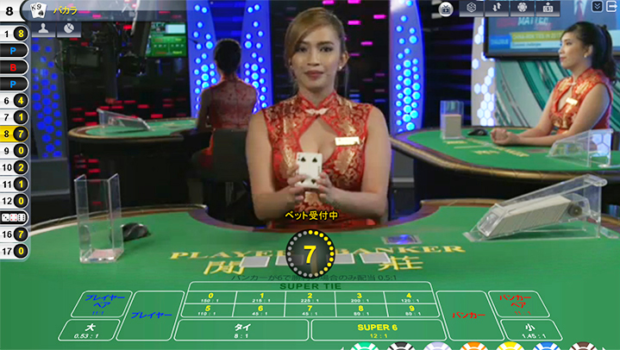
No accessibility audit would be thorough without admitting where work remains. The most prominent gap I came across involved third-party live dealer games, several of which load within iframes that do not adopt the parent site’s ARIA enhancements or keyboard handlers. This means a player depending on a screen reader might find themselves in a silent zone when the table renders, and the only recourse is to exit and re-enter the lobby. I also noticed that on smaller mobile screens, some touch targets inside the sportsbook bet slip fall below the suggested 44 by 44 pixel size, making them challenging to tap without zooming. Winmaker’s development team seems aware of these limitations, as the accessibility statement references ongoing collaboration with game providers to boost compatibility. The mobile app, while cleaner than the old version, still misses the full visual customisation panel present on desktop, which comes across like an gratuitous restriction. Despite these drawbacks, I see the direction as sincerely positive; the operator has emphasised structural accessibility in its own code, and the remaining issues are chiefly at the integration layer where industry-wide standards are still evolving. I will keep monitor updates, but for now, the platform serves as a strong reference point for how an online casino can commit to serving all players with dignity.
